What Makes a Quality Tandoor? A Buyer’s Guide
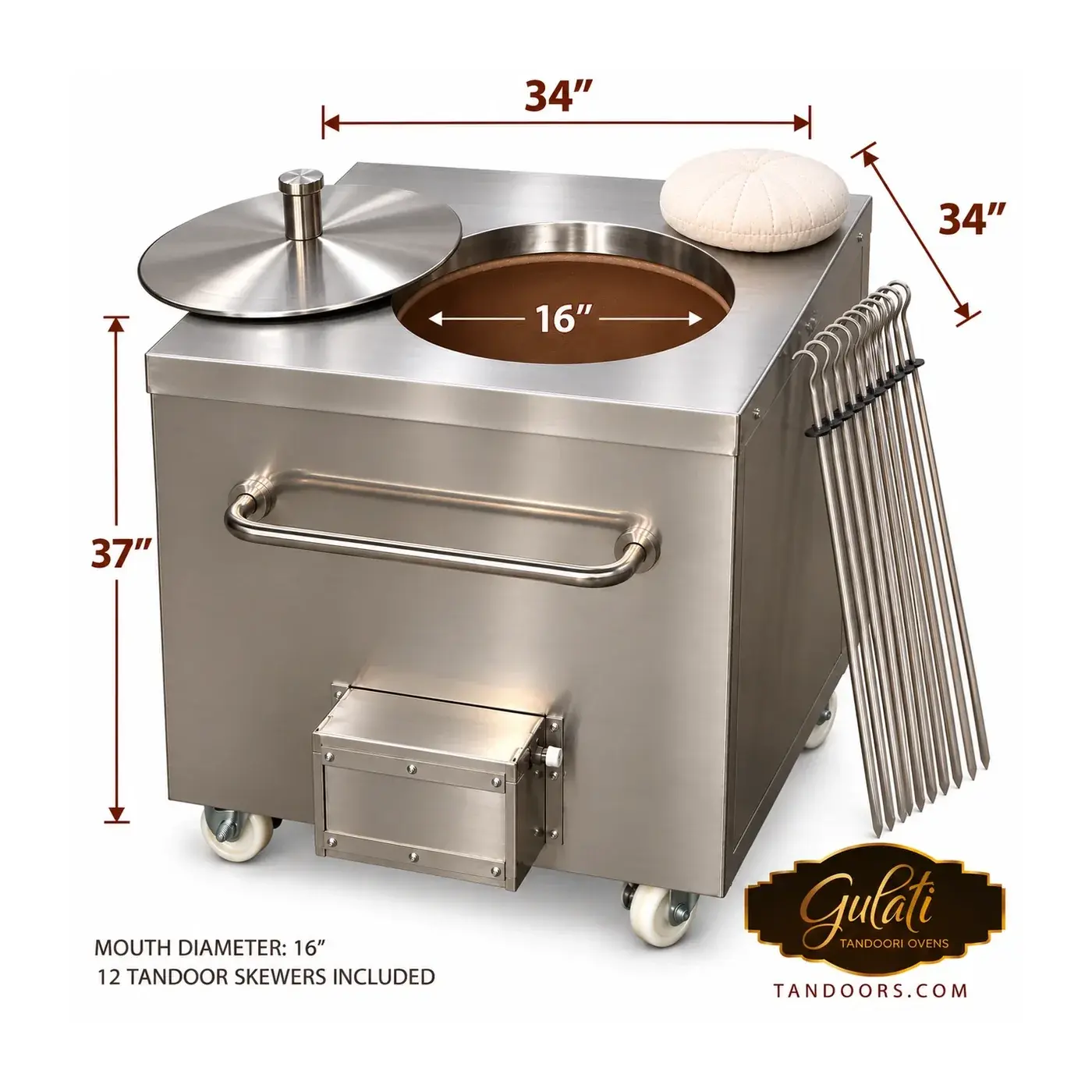
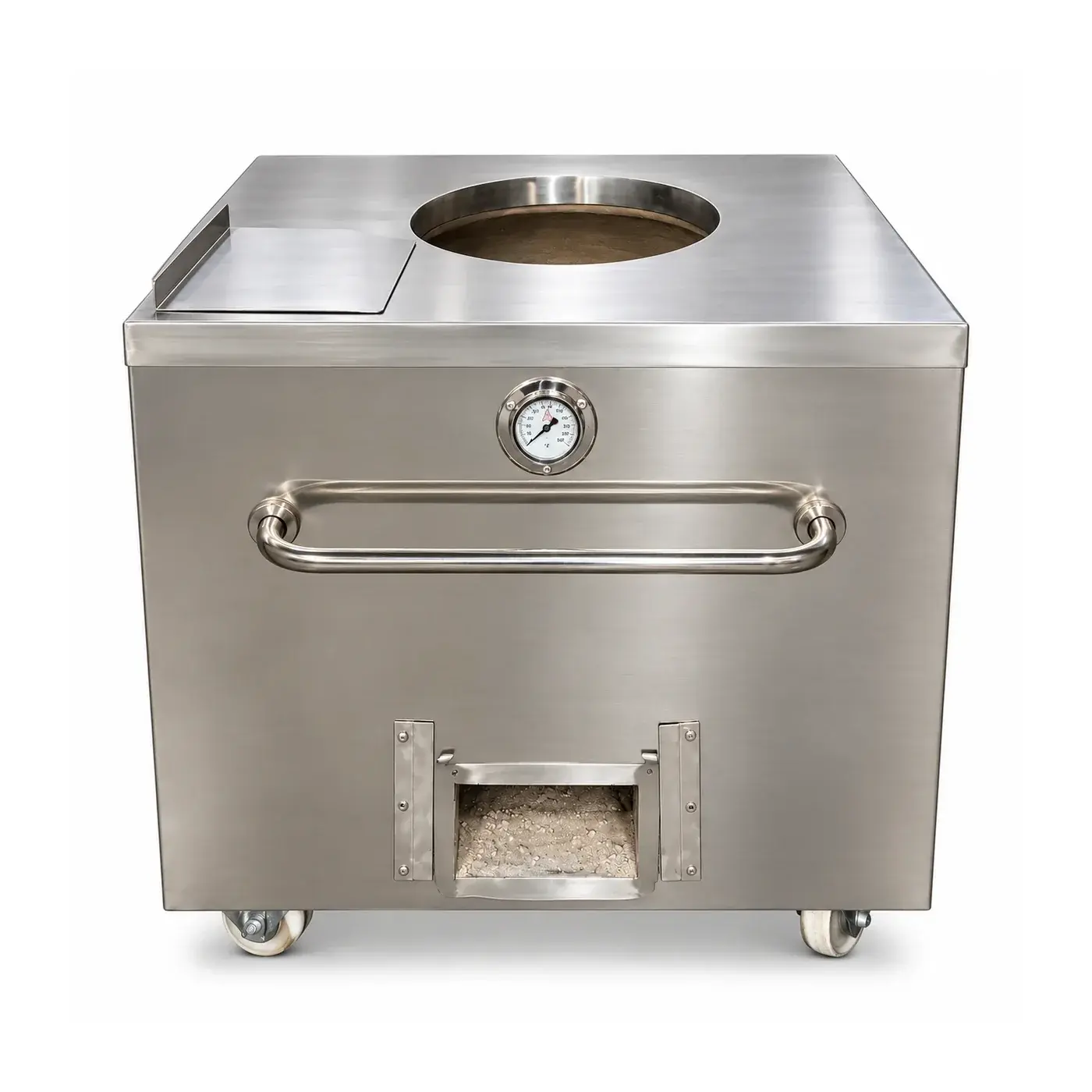
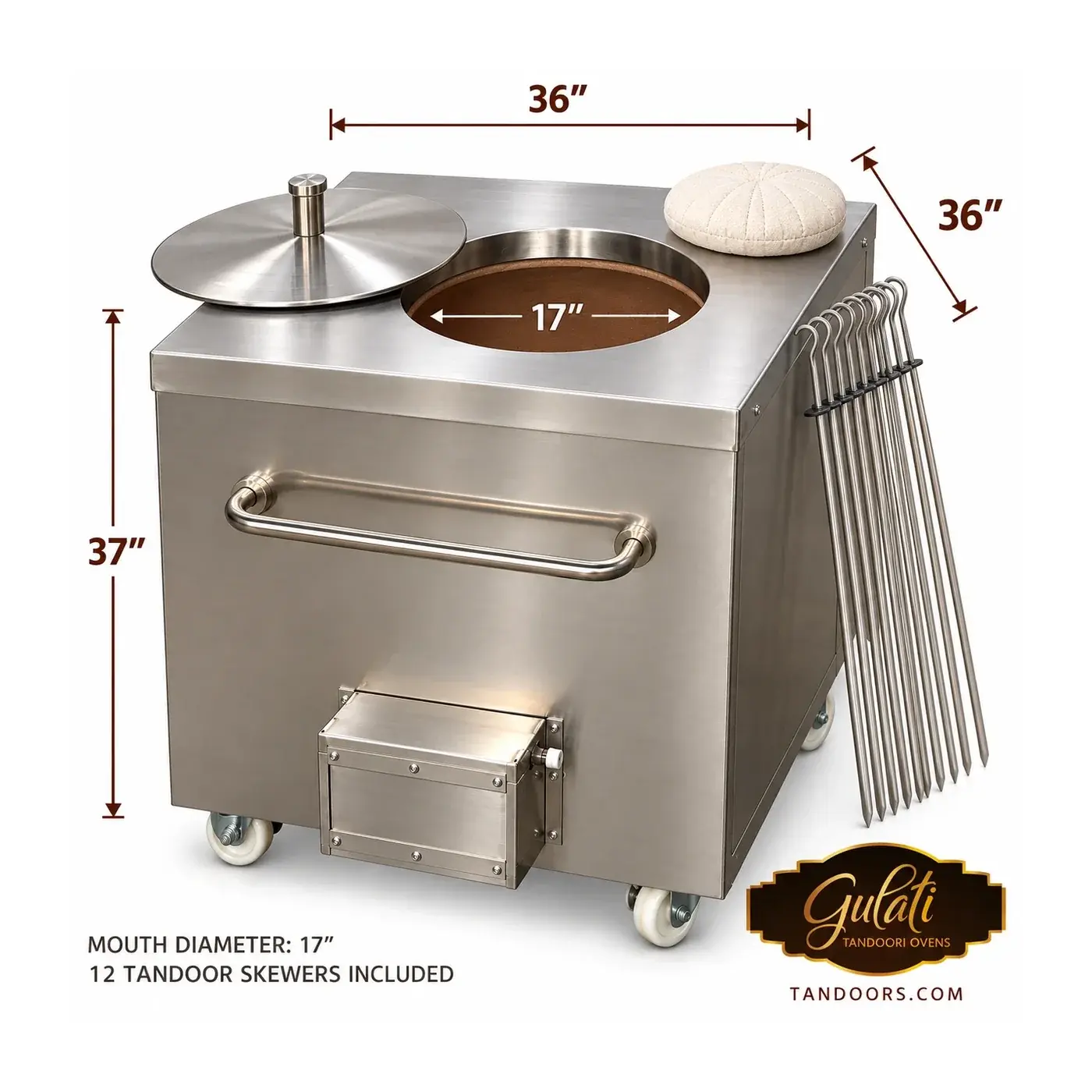
Most tandoors look alike from the outside: a stainless steel box with a round opening on top. What you cook on - and how long the oven lasts - is decided by what's inside. Here's what to look at before you buy, whether it's for a restaurant line or your backyard.
1. The clay pot is the oven
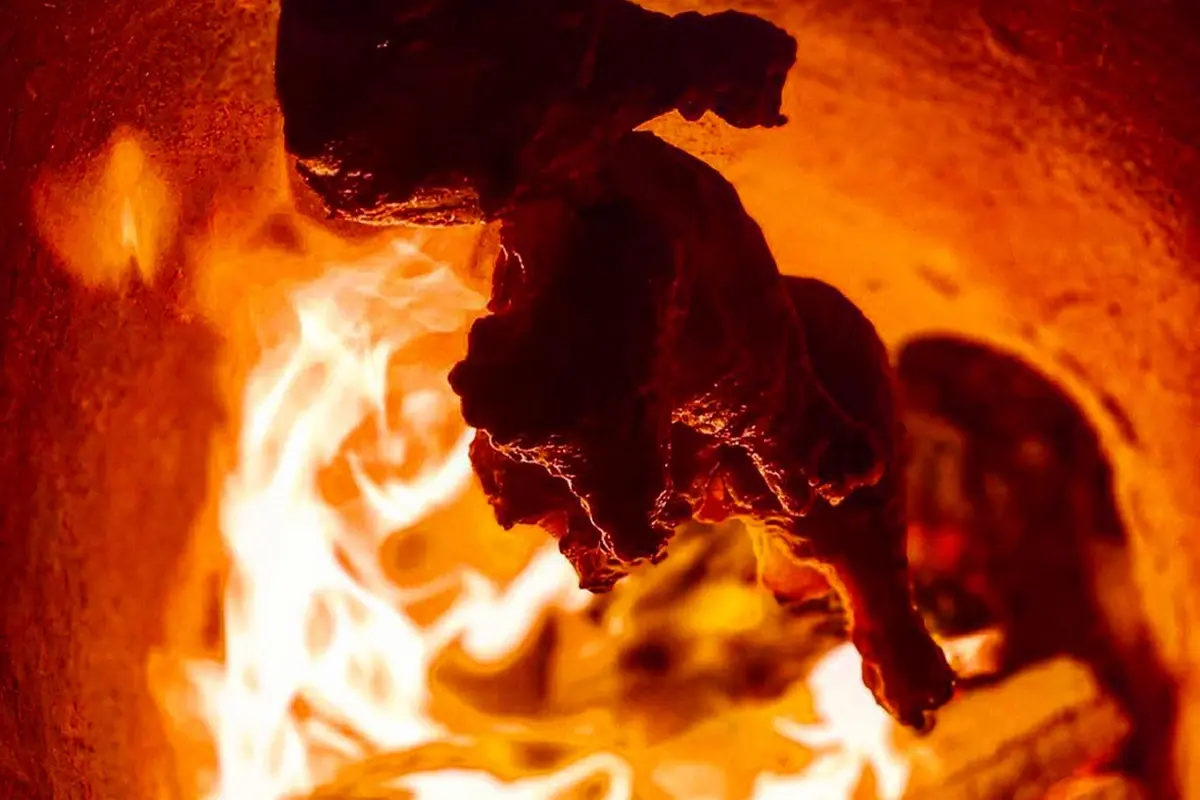
Bread bakes on the clay wall and the clay holds the heat. A thicker, well-fired clay pot stores more heat, so the temperature stays steady when you open the lid, slap on a batch of naan or load a full set of skewers - and it recovers faster between batches. Thin pots heat quickly but swing in temperature, and they're more likely to crack from repeated heating and cooling.
Ask: How thick is the clay wall? Where is the pot made, and how is it fired? Is repair clay included?
2. Insulation decides efficiency - and comfort
Between the clay pot and the steel body there should be dense, heavy insulation. It keeps the heat in the clay instead of the cabinet: less fuel to reach baking temperature, a cooler outside for the cook standing in front of it all day, and less heat dumped into your kitchen.
Ask: What fills the space between the pot and the steel? How hot does the outside get after a full service?
3. The burner: built for 12-hour days
A restaurant tandoor runs for hours at a time, right next to intense heat. An industrial gas burner with a standing pilot lights the main flame without an electronic ignition module - fewer electronic parts sitting near the heat means fewer parts to wear out and fewer service calls. Electronic ignition can be convenient, but its igniters, sensors and control boards live in a very hot place.
Ask: Is it a pilot burner or electronic ignition? How often do ignition parts need replacing, and can a local technician service it? What's the BTU rating?
4. The steel body and the details
Look for heavy-gauge stainless steel, solid welds, a lid that seals the mouth, and wheels or casters rated for the weight - a full-size tandoor is heavy. These are the parts you touch every day.
5. Certification you can verify
For a restaurant, the tandoor should be certified to NSF/ANSI 4, the sanitation standard for commercial cooking equipment - your health inspector will look for the listing label. The gas burner should also carry a recognized gas safety listing. Certified products appear in the certifier's public directory, so you can check the exact model.
6. Parts, support and who stands behind it
A tandoor is a long-term purchase. Ask how long the company has been selling tandoors, whether parts and repair clay ship from a US warehouse, what the warranty covers, and whether a real person will help you cure the clay and cook your first batch.
7. Size it to your space
The mouth diameter decides how much bread fits per load; the cabinet size decides whether it fits through your doorway and under your hood. Measure before you buy - or let the Tandoor Finder pick the size for you.
How GULATI builds a tandoor
- Thick, high-heat clay pot handcrafted by artisans in India - the real oven, not a metal liner.
- Heavy insulation packed between the clay and the steel, so the heat stays in the clay.
- Industrial 100,000 BTU gas burner with a standing pilot on our NSF restaurant tandoors - no electronic ignition module to fail mid-service.
- NSF/ANSI 4 certified restaurant models, in a heavy-duty stainless steel body.
- Since 1993 - parts, repair clay and one-on-one support from our New Jersey and Los Angeles warehouses.
Questions about a specific model? Call (908) 208-3582, text us, or browse restaurant tandoors and home tandoors.